
Recover a SQL Database From Suspect Mode (5 Ways)

Suspect mode in SQL Server means the recovery of a database started and failed. SQL Server cannot open at least the primary filegroup so every connection to the database fails.
Suspect mode shows as (Suspect) next to the database name in Object Explorer. This guide explains the causes and five ways to recover the database in the order that protects your data.
Quick SummarySuspect mode in SQL Server means the recovery of a database failed. Find the cause in the error log first. Copy the database files before any repair. Restore a verified backup when you have one. Open the database in emergency mode to export the data. Repair the database with REPAIR_ALLOW_DATA_LOSS as a last resort. Use SQL Recovery when no backup exists.
What Puts a SQL Database in Suspect Mode?
According to Microsoft, SUSPECT means at least the primary filegroup is suspect and can be damaged. SQL Server could not recover the database at startup. Errors during a redo or undo step set the state too, as SQL Server error 3414 shows.
- Damaged data or log file. Corrupt pages stop the recovery before it finishes.
- Missing file. Someone deleted, moved or renamed the MDF or LDF file.
- Disk failure. The storage returns I/O errors while SQL Server opens the file. SQL Server error 823 appears in the log in this case.
- Improper shutdown. A power cut or a service crash ends SQL Server in the middle of a transaction.
Three states look alike and need different fixes. Use the table to match your database.
| State | Meaning | Who sets it |
|---|---|---|
| RECOVERY PENDING | Recovery has not started because a file or a resource is missing. Nothing is damaged. | SQL Server |
| SUSPECT | Recovery started and failed. The primary filegroup can be damaged. | SQL Server |
| EMERGENCY | Only sysadmin members open the database and logging is disabled. | You |
Do You Know?Recovery pending has a different cause and a lighter fix. Follow fix recovery pending in SQL Server when sys.databases shows RECOVERY_PENDING.
What Should You Check Before You Recover a Database From Suspect Mode?
Check the state, the file paths and the newest backup. Open Management and SQL Server Logs in SSMS to find the error that put the database in this state. Copy the MDF, NDF and LDF files to another volume before you touch the database.
SELECT name, state_desc FROM sys.databases WHERE name = N'OrdersDB';

SELECT name, physical_name, state_desc
FROM sys.master_files
WHERE database_id = DB_ID(N'OrdersDB');

SELECT TOP 5 database_name, type, backup_finish_date
FROM msdb.dbo.backupset
WHERE database_name = N'OrdersDB'
ORDER BY backup_finish_date DESC;
Type D marks a full backup, I a differential backup and L a log backup. Recent full backups point to Method 1.
How to Recover a SQL Database From Suspect Mode?
Try the methods in this order. Every example uses the database OrdersDB and the folder D:\Recovery. Replace the names with your own values.
Method 1: Restore a Verified Backup
Restore the database from backup when suspect mode comes from damaged files. Microsoft names a restore from a known good backup as the primary recovery method. Add the differential and log backups in order as restore database with NORECOVERY explains.
RESTORE VERIFYONLY FROM DISK = N'D:\Backups\OrdersDB_Full.bak';

RESTORE DATABASE OrdersDB
FROM DISK = N'D:\Backups\OrdersDB_Full.bak'
WITH REPLACE, RECOVERY, STATS = 10;
Method 2: Open the Database in Emergency Mode and Export the Data
Use this method when no backup exists or the backup is old. Microsoft states that a sysadmin member can set a suspect database to EMERGENCY and open it for troubleshooting. Copy the tables that still open into a new database.
ALTER DATABASE OrdersDB SET EMERGENCY;

CREATE DATABASE OrdersDB_Copy;
GO
SELECT * INTO OrdersDB_Copy.dbo.Orders FROM OrdersDB.dbo.Orders;
SELECT INTO copies rows and column types only. Create the indexes and constraints again in the new database.
Method 3: Repair the Database With REPAIR_ALLOW_DATA_LOSS
Use this method after Method 2 saved your data. Microsoft calls REPAIR_ALLOW_DATA_LOSS an emergency last resort. In emergency mode the repair can use pages with I/O errors and rebuild the transaction log.
ALTER DATABASE OrdersDB SET EMERGENCY;
ALTER DATABASE OrdersDB SET SINGLE_USER WITH ROLLBACK IMMEDIATE;
DBCC CHECKDB (OrdersDB, REPAIR_ALLOW_DATA_LOSS) WITH NO_INFOMSGS;
ALTER DATABASE OrdersDB SET MULTI_USER;
Heads UpThe repair can lose data and break transactional consistency. You cannot undo it. Execute DBCC CHECKCONSTRAINTS afterward and take a backup at once. Follow DBCC CHECKDB repair failures when the command stops with an error.
Method 4: Attach a Copy of the MDF File With a New Log
Use this method when the log file is the damaged part. Copy the MDF and NDF files to D:\Recovery and attach them under a new name. Microsoft states that ATTACH_REBUILD_LOG needs a clean shutdown and all data files.
CREATE DATABASE OrdersDB_Copy
ON (FILENAME = N'D:\Recovery\OrdersDB.mdf')
FOR ATTACH_REBUILD_LOG;
Attaching with a new log breaks the log backup chain. Take a full backup of the new database at once. Error 5171 appears when you select a secondary file instead of the primary file. Follow fix SQL Server error 5171 in that case.
Method 5: Recover the Database With SQL Recovery
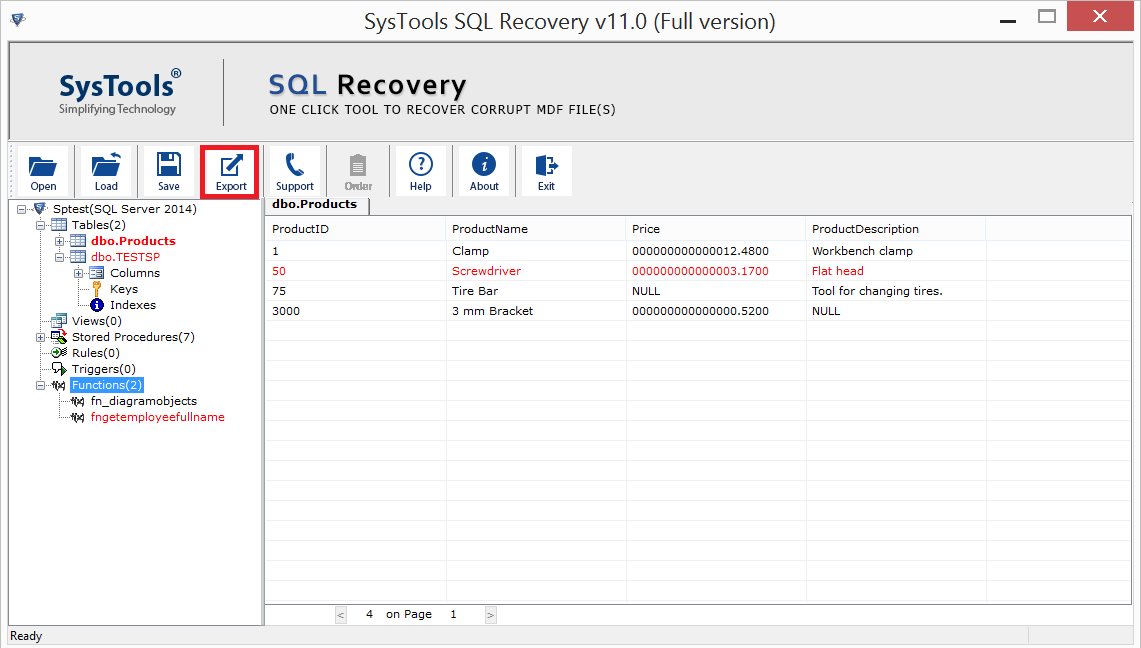
Use this method when suspect mode remains after Methods 1 to 4 and no backup exists. SQL Recovery opens the damaged MDF and NDF files without SQL Server, previews the tables, views, triggers, rules, functions and stored procedures and exports them. SQL Recovery handles SUSPECT and recovery pending databases and brings back deleted records.
Download SQL Recovery Buy SQL Recovery
- Install SQL Recovery and select Add File.
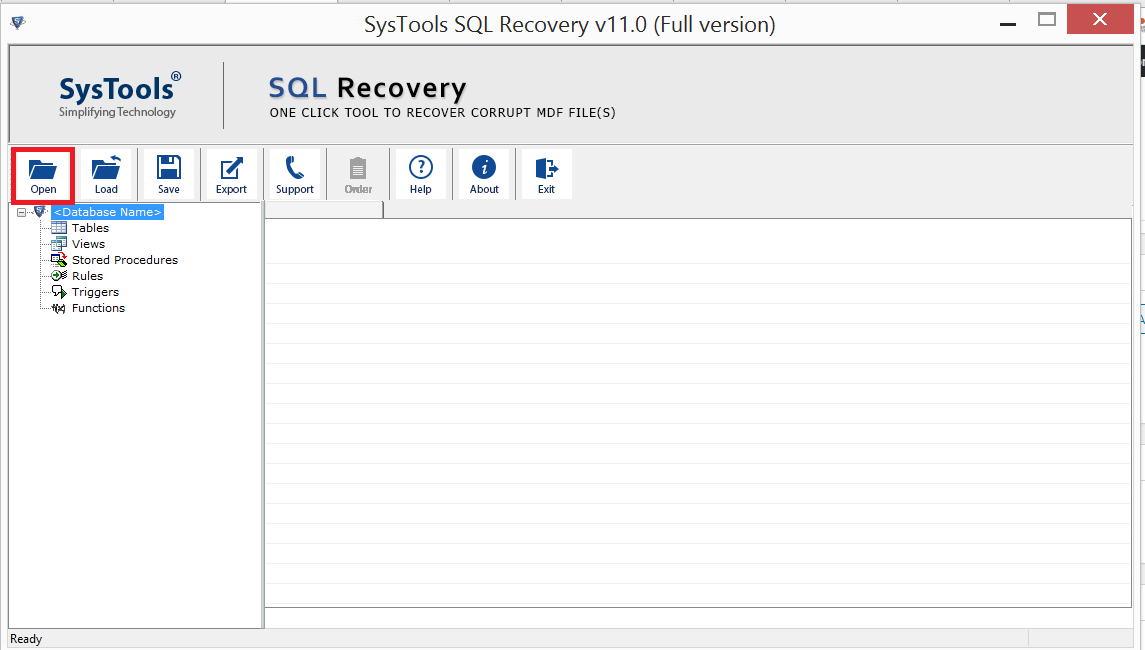
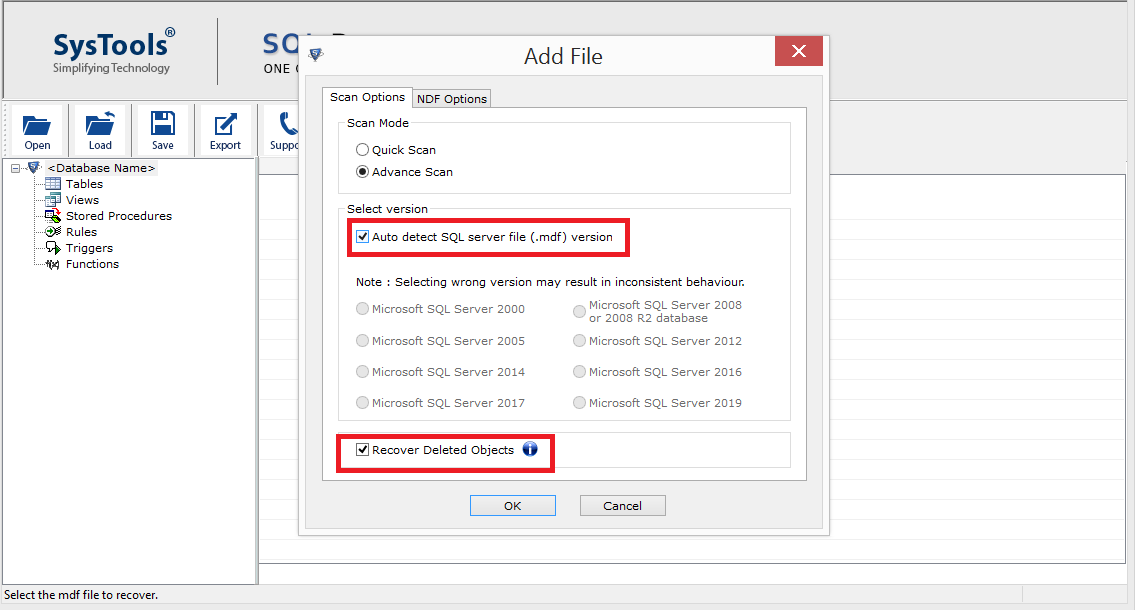
- Browse to the MDF file and select Advanced Scan. Confirm the SQL Server version and tick the deleted records option.
- Open the preview and check the recovered database components.
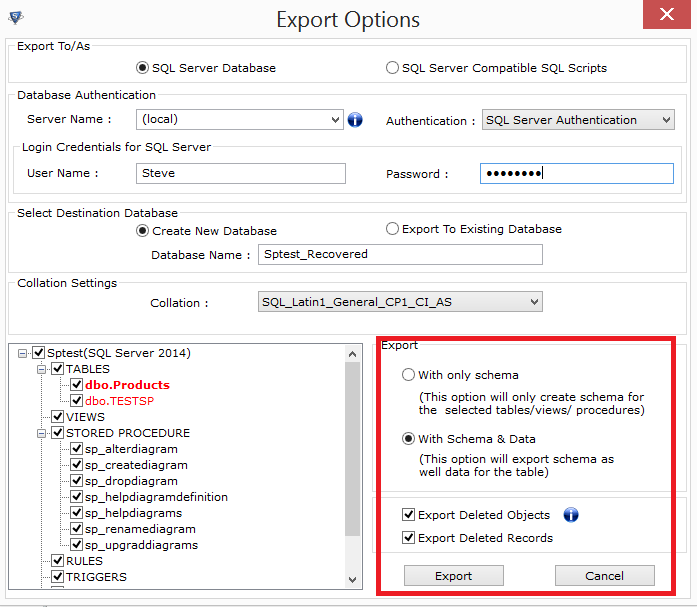
- Select Export and save the objects to a SQL Server database, to SQL scripts or to CSV files.
What Are the Software and System Specifications of SQL Recovery?
Check both tables before you install SQL Recovery on the server or on a separate workstation.
Software Specifications
| Attribute | Detail |
|---|---|
| Software name | SQL Recovery |
| Version | 14.0 |
| File types | MDF and NDF |
| SQL Server versions | 2025, 2022, 2019, 2017, 2016, 2014, 2012, 2008 R2, 2008, 2005 and 2000 |
| Scan modes | Quick Scan and Advanced Scan |
| Export options | SQL Server database, SQL scripts and CSV |
| SQL Server installation | Needed only for export to a live server |
| Demo limit | Preview of every item and export of 25 records per table and 5 other objects |
System Specifications
| Component | Requirement |
|---|---|
| Processor | Intel Core 2 Duo E4600 at 2.40 GHz or equivalent |
| RAM | 4 GB |
| Hard disk space | 100 MB free |
| Operating system | Windows 7, 8 and 10 (32 or 64 bit), Windows 11 (64 bit), Windows Server 2008, 2012 R2, 2016, 2019, 2022 and 2025 |
| Framework | Microsoft .NET Framework 4.5 or later |
| Permission | Launch SQL Recovery as administrator |
Frequently Asked Questions
Does Suspect Mode Mean You Lost the Data?
No. Suspect mode shows that recovery failed and says nothing about your tables. Copy the files first and then use Method 2 or SQL Recovery to export the tables.
Can You Drop a Suspect Database to Fix It?
No. Dropping removes the database from the instance and fixes nothing. You still need a backup or a recovery tool to bring the data back.
Does Restarting SQL Server Fix Suspect Mode?
No. SQL Server repeats the same failed recovery at startup and marks the database as suspect again.
Can You Check a Suspect Database With DBCC CHECKDB?
Yes. Set the database to EMERGENCY and SINGLE_USER first. Use REPAIR_ALLOW_DATA_LOSS only when no backup exists.
Is Suspect Mode the Same as Recovery Pending?
No. Suspect means recovery started and failed. Recovery pending means recovery has not started.
Does REPAIR_ALLOW_DATA_LOSS Always Bring the Database Online?
No. Repairs can stop on an error and can delete damaged rows. Export your data with Method 2 before you try it.
How Do You Prevent Suspect Mode?
Take verified backups and check the database with DBCC CHECKDB every week. Monitor disk errors and free space on the data volume.
Final Words on Suspect Mode in SQL Server
Suspect mode protects a database that failed recovery. Copy the files, restore a verified backup and use the repair command only when nothing else works.
Take a full backup after every successful recovery and verify it with RESTORE VERIFYONLY.
Key Takeaways
- Suspect mode means recovery started and failed and the primary filegroup can be damaged.
- Copy the database files before any repair.
- Emergency mode opens the database so you can export the data before you repair.
- REPAIR_ALLOW_DATA_LOSS is a last resort that can lose data.
Next Read